
How to Save Domestic Cooking Gas
How to Save Domestic Cooking Gas: Tips to Reduce LPG Consumption and Alternative Solutions
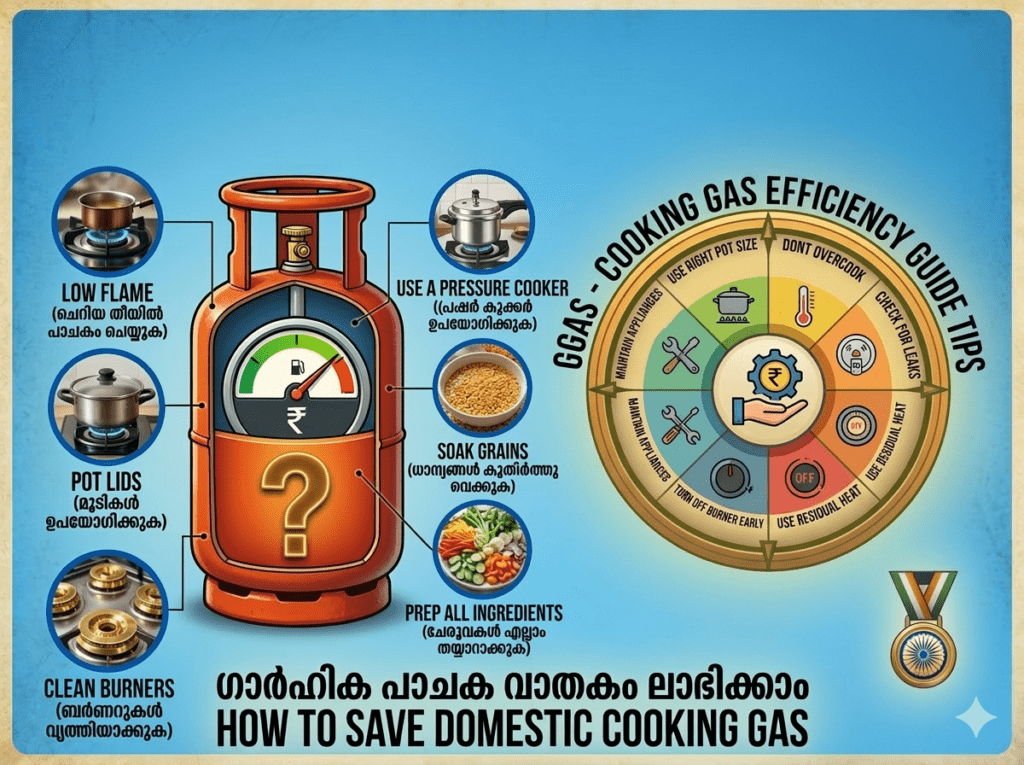
Introduction
Domestic cooking gas, commonly known as LPG (Liquefied Petroleum Gas), is widely used in households for cooking. With the increasing cost of LPG cylinders, many families are looking for effective ways to reduce gas consumption and save money. Efficient use of cooking gas not only reduces household expenses but also helps conserve energy and protect the environment.
In this article, we discuss practical tips to save domestic cooking gas while cooking and explore alternative solutions that can reduce dependence on LPG.
Why Saving Cooking Gas Is Important
Saving LPG is beneficial for several reasons:
- Reduces household expenses
- Conserves energy resources
- Reduces environmental impact
- Improves kitchen efficiency
Simple changes in cooking habits can significantly reduce gas consumption over time.
Practical Tips to Save Cooking Gas While Cooking
1. Use Pressure Cookers Whenever Possible
Pressure cookers cook food faster by trapping steam inside. This reduces cooking time and saves a significant amount of gas.
Benefits:
- Faster cooking
- Less gas consumption
- Retains nutrients in food
2. Keep Lids on Cooking Pots
Cooking with a lid helps retain heat and cooks food more quickly. Without a lid, heat escapes and cooking takes longer.
Always cover pots while boiling vegetables, rice, or soups.
3. Soak Food Before Cooking
Foods like rice, beans, lentils, and chickpeas take longer to cook. Soaking them for 30 minutes to several hours can reduce cooking time and save gas.
Examples:
- Soak rice for 15–20 minutes
- Soak lentils for 30 minutes
- Soak chickpeas overnight
4. Use the Right Size Burner
Using a large burner for small utensils wastes gas. Always match the burner size with the utensil size.
Tip:
- Small vessels → small burner
- Large vessels → large burner
5. Cook Multiple Dishes Together
When using a pressure cooker, cook multiple food items at the same time using stacked containers.
This technique is commonly used in Indian kitchens and helps reduce cooking time and gas usage.
6. Keep the Flame Low After Boiling
Once food starts boiling, reduce the flame to a low or medium level. High flames after boiling waste gas without speeding up cooking.
7. Use Flat-Bottomed Utensils
Flat-bottomed utensils absorb heat better and cook food more efficiently.
Avoid using damaged or uneven-bottomed utensils, which waste heat.
8. Maintain Your Gas Stove Regularly
Dirty burners and clogged gas holes can reduce flame efficiency.
Regular maintenance tips:
- Clean burners frequently
- Check gas pipes for leakage
- Ensure proper flame color (blue flame indicates efficient combustion)
Alternative Solutions to Reduce LPG Usage
Apart from saving gas, households can adopt alternative cooking methods.
1. Induction Cooktops
Induction stoves use electricity and magnetic energy to heat utensils.
Advantages:
- Faster cooking
- Energy efficient
- Safe and clean
Many households now use induction cooktops alongside LPG stoves.
2. Electric Pressure Cookers
Electric pressure cookers combine pressure cooking with electricity. They are efficient and require less supervision.
Benefits:
- Automatic temperature control
- Reduced cooking time
- Energy efficient
3. Solar Cookers
Solar cookers use sunlight to cook food and require no fuel.
Advantages:
- Zero fuel cost
- Environment-friendly
- Ideal for sunny regions
However, cooking time is slower and depends on sunlight availability.
4. Biogas Plants
Biogas is produced from organic waste such as food scraps, animal dung, and agricultural waste.
Benefits:
- Renewable energy source
- Reduces kitchen waste
- Provides free cooking fuel
Biogas plants are commonly used in rural areas.
Additional Energy-Saving Kitchen Habits
Here are some simple habits that help reduce cooking gas usage:
- Plan meals in advance
- Cut vegetables into smaller pieces to cook faster
- Use thermal cookers or insulated containers
- Avoid repeatedly reheating food
Conclusion
Saving domestic cooking gas is not difficult if we adopt efficient cooking practices. Simple steps such as using pressure cookers, covering utensils, soaking food, and maintaining gas stoves can significantly reduce LPG consumption.
In addition, alternative solutions like induction cooktops, solar cookers, and biogas systems can help households reduce their dependence on LPG. By combining efficient cooking habits with modern technology, we can save money, conserve energy, and protect the environment.